
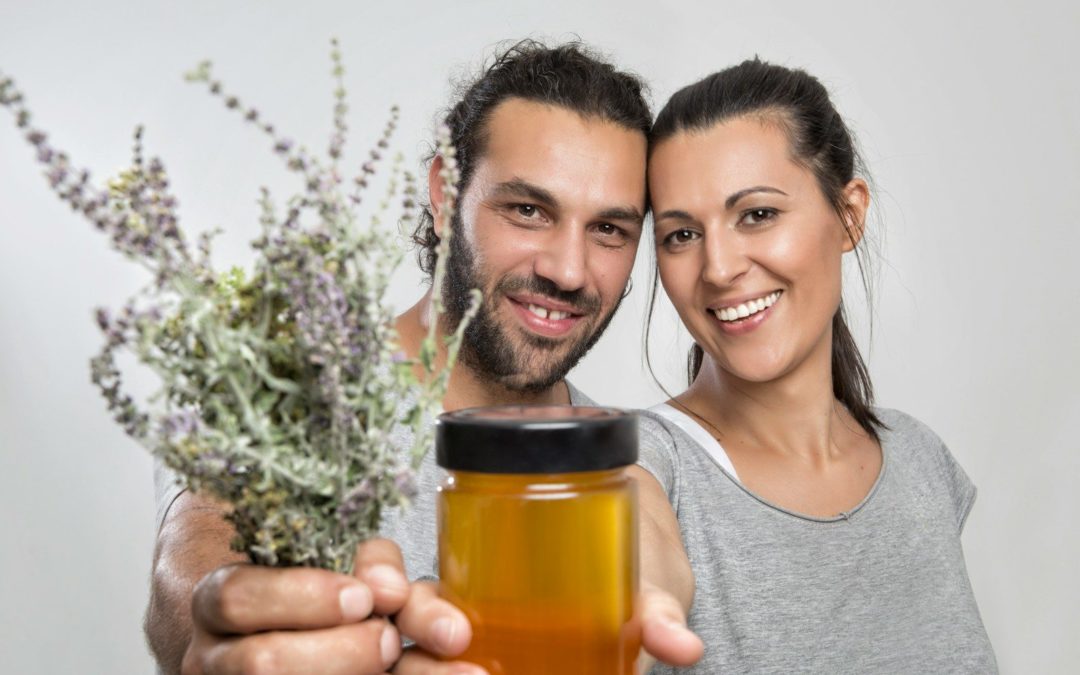
Chios mastiha, mountain tea, and thyme honey are still the stars of Greek medicine

Chios mastiha, mountain tea, and thyme honey are still the stars of Greek medicine

Chios mastiha, mountain tea, and thyme honey are still the stars of Greek medicine.

Introduction
Greece’s landscape – from the dry, resinous slopes of Chios to the high, aromatic meadows of the mainland and islands – has produced a small but potent pharmacopeia of natural remedies that remain widely used today. Among these, Chios mastiha (mastic gum), Greek mountain tea (Sideritis species), and thyme honey stand out. They are embedded in folk practice, celebrated in cultural traditions and cuisine, and increasingly examined by modern science for antimicrobial, anti-inflammatory, antioxidant and other health-promoting properties.

A brief history

  • Chios mastiha: Harvested for millennia from the Pistacia lentiscus var. chia on the southern side of the Greek island of Chios, mastic has a long recorded history. Ancient physicians and pharmacists valued it for digestive and oral-health uses; Byzantine and Ottoman archives document its commercial and medicinal role; and the resin’s economic and cultural importance has been recognized up to the present day. The “Mastic of Chios” holds a protected designation of origin (PDO) within the EU.
  • Mountain tea (Sideritis): Known in Greek as tsai tou vounou (mountain tea) or shepherd’s tea, Sideritis species have been brewed as infusions since antiquity. Pliny and later herbalists described Sideritis as useful for colds, gastrointestinal complaints and as a general restorative. Rural Greeks used it as an everyday infusion for mild ailments and as a warming, relaxing drink.
  • Thyme honey: Greece’s flora produces many monofloral honeys; thyme (various Thymus and Thymbra species) yields a strongly aromatic, amber honey prized both for taste and for therapeutic use. Farmers and healers traditionally used it for respiratory infections, wound care and as a nutritional tonic.

What they are and how they’re used

  • Chios mastiha: A natural tree resin (oleoresin). Harvested by making small cuts in the bark; the resin “tears” drip and harden into glossy, tear-shaped droplets. Uses include chewing the resin as a breath freshener and oral antiseptic, dissolving small pieces in water or oil for digestive remedies, or using refined extracts in lozenges, gums, toothpastes and cosmetics.
  • Mountain tea (Sideritis spp.): A herbal infusion made from dried aerial parts (flowers, leaves, stems). Steeped in hot water to make a straw-colored, mildly floral tea often drunk plain or with a little honey and lemon.
  • Thyme honey: A monofloral honey produced when bees forage predominantly on thyme/Thymbra flowers. Consumed directly, used as a sweetener for infusions (including mountain tea), and applied topically in traditional wound care or for cough relief.

What modern research says (summary)

  • Antimicrobial and oral health: Studies support mastic’s antibacterial activity against certain oral pathogens and Helicobacter pylori, and its inclusion in oral-care products (toothpaste, mouthwashes) is supported by both tradition and research. Thyme honey also shows antimicrobial properties associated with its high phenolic content and low water activity; it is similar to other medicinal honeys in its capacity to inhibit microbial growth in vitro.
  • Gastrointestinal effects: Mastic has been investigated for relief of functional dyspepsia and as adjunctive therapy in H. pylori infection, with some clinical and experimental evidence for benefit. Mountain tea has been used for mild digestive complaints, though rigorous clinical data are more limited.
  • Anti-inflammatory and antioxidant effects: Mountain tea is rich in flavonoids and other antioxidants; lab studies suggest anti-inflammatory and neuroprotective potential. Thyme honey’s antioxidant profile also contributes to its traditional use for soothing sore throats and supporting recovery.
  • Respiratory support and immune modulation: Thyme honey’s demulcent and antimicrobial actions justify its traditional role for cough and upper respiratory symptoms; mountain tea is commonly used to ease colds and as a mild relaxant.

Examples and everyday uses

  • Oral hygiene: Chewing a piece of Chios mastiha after meals for breath, or using toothpaste containing mastic extract to help reduce plaque and gingivitis.
  • Digestive aid: A teaspoon of ground mastic or a few drops of mastic oil (in food or water) used traditionally for mild indigestion or heartburn; many modern products specify standardized extracts and doses.
  • Everyday tea: Mountain tea infusion (1-2 teaspoons dried herb per cup, steep 5-10 minutes) drunk hot with a spoonful of thyme honey for colds or as a calming evening drink.
  • Cough remedy: A warm infusion of mountain tea sweetened with thyme honey, sipped slowly to coat the throat and reduce coughing.
  • Topical care: Thyme honey applied as a protective dressing for minor wounds and burns (after cleaning) – used traditionally and sometimes recommended when medical-grade honey (like Manuka) is not available. Note: medical consultation is advised for significant wounds or infections.
  • Culinary and cultural: Mastic is used in sweets (kourabiedes, ice creams, halva), mountain tea is a national comfort beverage, and thyme honey is a table honey prized for its unique aroma.

FAQs

Q: Are these remedies safe? Any side effects?
A: Generally they are safe when used as food or modest herbal preparations. Mastic can cause allergic reactions in people with tree resin sensitivities. Some individuals may have gastrointestinal upset from mastic. Mountain tea is well tolerated in typical dietary amounts; excessive use of any concentrated herbal preparation may cause unwanted effects. Thyme honey is not safe for infants under 12 months (botulism risk). If you have allergies, are pregnant or breastfeeding, or are on medications (especially anticoagulants, anti-diabetics or immunosuppressants), consult a healthcare professional before regular therapeutic use.

Q: Can Chios mastiha cure H. pylori or stomach ulcers?
A: Mastic has shown activity against H. pylori in vitro and in some small clinical studies, and some people report symptom improvement. However, it should not replace conventional antibiotic regimens when H. pylori infection is confirmed. Discuss adjunctive use with your physician.

Q: How much mountain tea should I drink?
A: For general wellness, 1-3 cups per day (each made from about 1-2 teaspoons of dried herb) is common in traditional use. Follow product directions for concentrated extracts.

Q: Is thyme honey better than other honeys?
A: Thyme honey has a distinct aromatic and phenolic profile that confers notable antimicrobial and antioxidant activity. “Better” depends on purpose and taste – for wound care, medical-grade honeys (e.g., sterilized manuka-grade dressings) are better documented in clinical settings.

Q: Where can I buy authentic Chios mastiha or Greek mountain tea?
A: Look for PDO or regionally labeled mastiha from Chios and reputable sellers for Sideritis teas. Buying from established Greek producers or specialty herb shops reduces the risk of substitutes.

Safety, sourcing and practical tips

  • Authentication matters: Chios mastiha with PDO labeling, and botanical identification for Sideritis species, help ensure authenticity.
  • Quality of honey: Single-origin thyme honey will be labeled as such; look for minimal processing and clear traceability.
  • Storage: Keep mastic in a cool, dry place (wrapped or in a sealed jar), mountain tea in an airtight container away from light, and honey in a sealed jar at room temperature.
  • Pregnant or breastfeeding women and people on medication should consult a healthcare provider before therapeutic use.
  • Children under 12 months should not receive honey.

Further reading and external links

  • Chios mastic (overview): https://en.wikipedia.org/wiki/Mastic
  • Sideritis (mountain tea) overview: https://en.wikipedia.org/wiki/Sideritis
  • Honey (general information, including floral honeys): https://en.wikipedia.org/wiki/Honey
  • PubMed Central search – Chios mastic: https://www.ncbi.nlm.nih.gov/pmc/?term=Chios+mastic
  • PubMed Central search – Sideritis (mountain tea): https://www.ncbi.nlm.nih.gov/pmc/?term=Sideritis+mountain+tea
  • PubMed Central search – thyme honey: https://www.ncbi.nlm.nih.gov/pmc/?term=thyme+honey
  • World Health Organization – Traditional, Complementary and Integrative Medicine: https://www.who.int/teams/traditional-complementary-integrative-medicine

Conclusion
Chios mastiha, mountain tea and thyme honey are more than nostalgic folklore: they are living parts of Greek culture and everyday medicine. Their long histories are reinforced by emerging scientific evidence that supports antimicrobial, anti-inflammatory and antioxidant benefits – though high-quality clinical trials are still limited for many traditional uses. Used sensibly and sourced carefully, they can offer mild symptomatic relief, culinary delight and a connection to centuries of Mediterranean herbal knowledge. As with any health intervention, consult a healthcare professional for serious conditions or before using these products as substitutes for proven medical treatments.

What is Greek’s folks medicine and do people still rely on it ?

What is Greek’s folks medicine and do people still rely on it ?

What is Greek’s folks medicine and do people still rely on it ?

Introduction

Greek folk medicine (also called traditional Greek medicine or popular medicine) is the body of healing knowledge, remedies, rituals and beliefs that developed in Greece over millennia. It draws on ancient classical texts (Hippocrates, Dioscorides), Byzantine medical traditions, local botanical knowledge from island and mountain communities, and influences from neighboring Mediterranean and Ottoman cultures. Today it survives as a living mix of plant-based remedies, dietary practices, physical therapies, religious rites and household commonsense-used sometimes instead of, but increasingly alongside, modern medicine.

A brief history

  • Antiquity: Classical authors such as Hippocrates (ca. 460-370 BCE) and Dioscorides (1st century CE) laid the foundations of Western medicine and materia medica. Many herbs and approaches they described-diet regulation, balancing humors, topical poultices-became embedded in folk practice.
  • Byzantine period: Medical texts were copied, adapted and transmitted through monasteries; religious and magical-religious elements blended with practical therapies (holy water, relics, prayers).
  • Ottoman and regional exchange: Centuries of contact with Anatolia, the Levant and the Balkans introduced new crops, techniques and herbal knowledge; at the same time, isolated islands and mountain villages preserved distinctive local recipes.
  • Modern era: As state-supported hospitals and pharmaceuticals expanded in the 20th century, traditional remedies declined in urban centers but remained strong in rural areas and among older generations. Economic issues (for example, during the 2010s austerity period) and renewed interest in “natural” treatments have helped revive some practices.

Core concepts and common practices

  • Herbal remedies: Infusions, decoctions, poultices, syrups and macerations from locally grown or wild-collected plants. Common species include:
  • Sideritis spp. (Greek “mountain tea”) – used as a tea for colds, digestion and general well-being.
  • Origanum dictamnus (dittany of Crete) – historically prized for wound healing and stomach complaints.
  • Olea europaea (olive oil) – topical for skin, mixed with herbs for massages, used orally for constipation.
  • Salvia officinalis (sage) – gargles for sore throat, tea for digestion.
  • Matricaria chamomilla (chamomile) – calming tea, anti-spasmodic for stomach aches.
  • Pistacia lentiscus var. chia (mastic gum from Chios) – used for digestive issues and oral hygiene.
  • Food as medicine: The Mediterranean diet-olive oil, legumes, vegetables, herbs, moderate wine-is itself a therapeutic continuum in folk thinking: diet prescriptions for specific conditions (e.g., cooling foods for “hot” imbalances).
  • Topicals and physical therapies: Poultices (onion, plantain, clay), compresses, olive-oil massages, heat (hot stones), cupping and, historically, bloodletting.
  • Alcohol and honey: Spirits (like tsipouro or raki) and wine used antiseptically or in tinctures; honey for wounds and coughs.
  • Religious and ritual healing: Prayers, blessings, holy water, and visits to saints’ shrines remain common-healing seen as both physical and spiritual.
  • Word-magic and charms: Incantations, protective charms and orally transmitted “recipes” (applied especially to children or to avert the “evil eye”).

Examples of traditional remedies and uses

  • Mountain tea (Sideritis spp.) infusion: A daily tea made from wild mountain tea is used for respiratory complaints, mild digestive trouble, and general fatigue.
  • Thyme or oregano honey syrop: Thyme-infused honey for sore throats and coughs.
  • Olive oil ear drops: Warmed olive oil for softening earwax or easing ear pain (commonly used, though caution is advised and it’s not a substitute for medical care).
  • Mastic gum (Chios mastiha): Chewed for oral health or consumed in a preparation for mild gastric discomfort.
  • Dittany poultice: Traditional poultice from Crete for wounds and sometimes used as a mythical “panacea” in folk lore.
  • Sage gargle: Sage leaves boiled and cooled for gargling with sore throat or mouth inflammations.

Do people still rely on Greek folk medicine?

Yes-but in nuanced ways. Modern Greece has a well-developed health system and most people use conventional medicine for serious illness. Nonetheless:

  • Complementary use: Many Greeks combine folk remedies with modern treatments-using herbal teas for mild colds, olive oil compresses for minor skin problems, or sage gargles for sore throats while seeing a doctor if symptoms worsen.
  • Rural persistence: In remote islands and mountainous villages, older residents often rely more on traditional knowledge-partly because of cultural continuity and partly due to limited access to specialized care.
  • Resurgence and commercialization: Interest in natural products, herbal supplements, and traditional foods has grown. Products like Chios mastiha, mountain tea, and thyme honey are marketed internationally.
  • Cultural and religious role: Ritual healing, saints’ shrines, and home remedies persist as expressions of identity and comfort, irrespective of clinical effectiveness.
  • Cautionary note: Not all folk remedies are safe or effective. Some are harmless, others ineffective, and a few can be dangerous if used instead of needed medical care or combined with pharmaceuticals without guidance.

Frequently Asked Questions (FAQs)

Q: Is Greek folk medicine the same as ancient Greek medicine?
A: Not exactly. Greek folk medicine has roots in ancient Greek and Byzantine texts (like Hippocrates and Dioscorides) but also absorbed local, regional and later influences. It’s a living folk tradition rather than a single historical system.

Q: Are these remedies scientifically proven?
A: Some components (e.g., olive oil benefits, antimicrobial properties of certain herbs, nutritional benefits of the Mediterranean diet) have scientific support. Others have limited or no reliable clinical evidence. Rigorous testing varies by remedy.

Q: Can I safely use Greek herbs at home?
A: Many herbal teas (mountain tea, chamomile) are generally safe in moderation for healthy adults. However, pregnant or breastfeeding women, children, people with chronic diseases, or those taking medicines should consult a healthcare professional before using herbal remedies-interactions and contraindications exist.

Q: Where can I buy authentic Greek traditional products?
A: Look for reputable vendors, protected-origin products (e.g., Chios mastiha), certified herbal suppliers or cooperatives. Buying from established producers reduces the risk of contamination or adulteration.

Q: Are any practices hazardous?
A: Yes-delaying professional care for serious conditions, using unsterile poultices, ingesting toxic plants, or mixing herbal remedies with prescription drugs without advice can be harmful.

Selected examples and sources (clickable)

  • Dioscorides, De Materia Medica (historic reference) – https://en.wikipedia.org/wiki/De_Materia_Medica
  • Greek mountain tea (Sideritis) – https://en.wikipedia.org/wiki/Sideritis
  • Dittany of Crete (Origanum dictamnus) – https://en.wikipedia.org/wiki/Origanum_dictamnus
  • Mastic of Chios (Pistacia lentiscus var. chia) – https://en.wikipedia.org/wiki/Chios_mastic
  • WHO Traditional Medicine Strategy – https://www.who.int/publications/i/item/9789241506096
  • Review on traditional knowledge and Mediterranean ethnobotany (example PubMed) – https://pubmed.ncbi.nlm.nih.gov/ (search term: “ethnobotany Greece”)

(For scholarly overviews search PubMed or Google Scholar for “Greece traditional medicine” or “ethnobotany Greece”.)

Practical considerations and safety

  • Use folk remedies for mild, self-limiting conditions and as supportive care (e.g., teas for mild colds, topical olive oil for dry skin).
  • Seek medical care for red flags: high fever, severe pain, shortness of breath, persistent bleeding, signs of infection, severe dehydration, sudden neurological changes.
  • Tell your doctor about any herbal or traditional therapies you use-herbs can interact with prescription drugs.
  • When collecting wild plants, be sure of correct identification; many species look similar and can be toxic if misidentified.

Conclusion

Greek folk medicine is a multifaceted cultural heritage combining ancient classical knowledge, local botanical wisdom, religious rituals and home-based therapies. While modern medicine is primary for serious health problems in Greece today, traditional remedies remain widely used-for everyday complaints, cultural continuity and as complementary care. Their continued relevance reflects not only practical utility but also identity, local economies and a global interest in natural products. As with any medical approach, the safest path balances respect for traditional knowledge with scientific scrutiny and professional medical advice.

Disclaimer: This article is informational and not medical advice. Consult a licensed healthcare professional before trying new treatments, especially if you have existing health conditions or are on medication.