
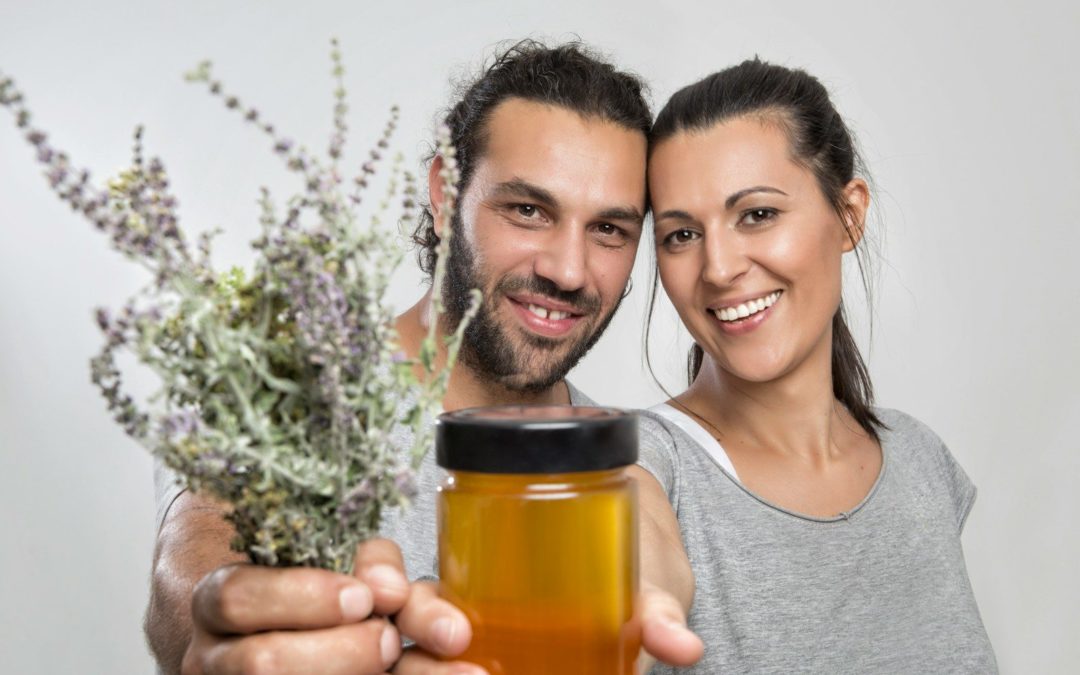
Chios mastiha, mountain tea, and thyme honey are still the stars of Greek medicine.
Introduction
Greece’s landscape – from the dry, resinous slopes of Chios to the high, aromatic meadows of the mainland and islands – has produced a small but potent pharmacopeia of natural remedies that remain widely used today. Among these, Chios mastiha (mastic gum), Greek mountain tea (Sideritis species), and thyme honey stand out. They are embedded in folk practice, celebrated in cultural traditions and cuisine, and increasingly examined by modern science for antimicrobial, anti-inflammatory, antioxidant and other health-promoting properties.
A brief history
- Chios mastiha: Harvested for millennia from the Pistacia lentiscus var. chia on the southern side of the Greek island of Chios, mastic has a long recorded history. Ancient physicians and pharmacists valued it for digestive and oral-health uses; Byzantine and Ottoman archives document its commercial and medicinal role; and the resin’s economic and cultural importance has been recognized up to the present day. The “Mastic of Chios” holds a protected designation of origin (PDO) within the EU.
- Mountain tea (Sideritis): Known in Greek as tsai tou vounou (mountain tea) or shepherd’s tea, Sideritis species have been brewed as infusions since antiquity. Pliny and later herbalists described Sideritis as useful for colds, gastrointestinal complaints and as a general restorative. Rural Greeks used it as an everyday infusion for mild ailments and as a warming, relaxing drink.
- Thyme honey: Greece’s flora produces many monofloral honeys; thyme (various Thymus and Thymbra species) yields a strongly aromatic, amber honey prized both for taste and for therapeutic use. Farmers and healers traditionally used it for respiratory infections, wound care and as a nutritional tonic.
What they are and how they’re used
- Chios mastiha: A natural tree resin (oleoresin). Harvested by making small cuts in the bark; the resin “tears” drip and harden into glossy, tear-shaped droplets. Uses include chewing the resin as a breath freshener and oral antiseptic, dissolving small pieces in water or oil for digestive remedies, or using refined extracts in lozenges, gums, toothpastes and cosmetics.
- Mountain tea (Sideritis spp.): A herbal infusion made from dried aerial parts (flowers, leaves, stems). Steeped in hot water to make a straw-colored, mildly floral tea often drunk plain or with a little honey and lemon.
- Thyme honey: A monofloral honey produced when bees forage predominantly on thyme/Thymbra flowers. Consumed directly, used as a sweetener for infusions (including mountain tea), and applied topically in traditional wound care or for cough relief.
What modern research says (summary)
- Antimicrobial and oral health: Studies support mastic’s antibacterial activity against certain oral pathogens and Helicobacter pylori, and its inclusion in oral-care products (toothpaste, mouthwashes) is supported by both tradition and research. Thyme honey also shows antimicrobial properties associated with its high phenolic content and low water activity; it is similar to other medicinal honeys in its capacity to inhibit microbial growth in vitro.
- Gastrointestinal effects: Mastic has been investigated for relief of functional dyspepsia and as adjunctive therapy in H. pylori infection, with some clinical and experimental evidence for benefit. Mountain tea has been used for mild digestive complaints, though rigorous clinical data are more limited.
- Anti-inflammatory and antioxidant effects: Mountain tea is rich in flavonoids and other antioxidants; lab studies suggest anti-inflammatory and neuroprotective potential. Thyme honey’s antioxidant profile also contributes to its traditional use for soothing sore throats and supporting recovery.
- Respiratory support and immune modulation: Thyme honey’s demulcent and antimicrobial actions justify its traditional role for cough and upper respiratory symptoms; mountain tea is commonly used to ease colds and as a mild relaxant.
Examples and everyday uses
- Oral hygiene: Chewing a piece of Chios mastiha after meals for breath, or using toothpaste containing mastic extract to help reduce plaque and gingivitis.
- Digestive aid: A teaspoon of ground mastic or a few drops of mastic oil (in food or water) used traditionally for mild indigestion or heartburn; many modern products specify standardized extracts and doses.
- Everyday tea: Mountain tea infusion (1-2 teaspoons dried herb per cup, steep 5-10 minutes) drunk hot with a spoonful of thyme honey for colds or as a calming evening drink.
- Cough remedy: A warm infusion of mountain tea sweetened with thyme honey, sipped slowly to coat the throat and reduce coughing.
- Topical care: Thyme honey applied as a protective dressing for minor wounds and burns (after cleaning) – used traditionally and sometimes recommended when medical-grade honey (like Manuka) is not available. Note: medical consultation is advised for significant wounds or infections.
- Culinary and cultural: Mastic is used in sweets (kourabiedes, ice creams, halva), mountain tea is a national comfort beverage, and thyme honey is a table honey prized for its unique aroma.
FAQs
Q: Are these remedies safe? Any side effects?
A: Generally they are safe when used as food or modest herbal preparations. Mastic can cause allergic reactions in people with tree resin sensitivities. Some individuals may have gastrointestinal upset from mastic. Mountain tea is well tolerated in typical dietary amounts; excessive use of any concentrated herbal preparation may cause unwanted effects. Thyme honey is not safe for infants under 12 months (botulism risk). If you have allergies, are pregnant or breastfeeding, or are on medications (especially anticoagulants, anti-diabetics or immunosuppressants), consult a healthcare professional before regular therapeutic use.
Q: Can Chios mastiha cure H. pylori or stomach ulcers?
A: Mastic has shown activity against H. pylori in vitro and in some small clinical studies, and some people report symptom improvement. However, it should not replace conventional antibiotic regimens when H. pylori infection is confirmed. Discuss adjunctive use with your physician.
Q: How much mountain tea should I drink?
A: For general wellness, 1-3 cups per day (each made from about 1-2 teaspoons of dried herb) is common in traditional use. Follow product directions for concentrated extracts.
Q: Is thyme honey better than other honeys?
A: Thyme honey has a distinct aromatic and phenolic profile that confers notable antimicrobial and antioxidant activity. “Better” depends on purpose and taste – for wound care, medical-grade honeys (e.g., sterilized manuka-grade dressings) are better documented in clinical settings.
Q: Where can I buy authentic Chios mastiha or Greek mountain tea?
A: Look for PDO or regionally labeled mastiha from Chios and reputable sellers for Sideritis teas. Buying from established Greek producers or specialty herb shops reduces the risk of substitutes.
Safety, sourcing and practical tips
- Authentication matters: Chios mastiha with PDO labeling, and botanical identification for Sideritis species, help ensure authenticity.
- Quality of honey: Single-origin thyme honey will be labeled as such; look for minimal processing and clear traceability.
- Storage: Keep mastic in a cool, dry place (wrapped or in a sealed jar), mountain tea in an airtight container away from light, and honey in a sealed jar at room temperature.
- Pregnant or breastfeeding women and people on medication should consult a healthcare provider before therapeutic use.
- Children under 12 months should not receive honey.
Further reading and external links
- Chios mastic (overview): https://en.wikipedia.org/wiki/Mastic
- Sideritis (mountain tea) overview: https://en.wikipedia.org/wiki/Sideritis
- Honey (general information, including floral honeys): https://en.wikipedia.org/wiki/Honey
- PubMed Central search – Chios mastic: https://www.ncbi.nlm.nih.gov/pmc/?term=Chios+mastic
- PubMed Central search – Sideritis (mountain tea): https://www.ncbi.nlm.nih.gov/pmc/?term=Sideritis+mountain+tea
- PubMed Central search – thyme honey: https://www.ncbi.nlm.nih.gov/pmc/?term=thyme+honey
- World Health Organization – Traditional, Complementary and Integrative Medicine: https://www.who.int/teams/traditional-complementary-integrative-medicine
Conclusion
Chios mastiha, mountain tea and thyme honey are more than nostalgic folklore: they are living parts of Greek culture and everyday medicine. Their long histories are reinforced by emerging scientific evidence that supports antimicrobial, anti-inflammatory and antioxidant benefits – though high-quality clinical trials are still limited for many traditional uses. Used sensibly and sourced carefully, they can offer mild symptomatic relief, culinary delight and a connection to centuries of Mediterranean herbal knowledge. As with any health intervention, consult a healthcare professional for serious conditions or before using these products as substitutes for proven medical treatments.