
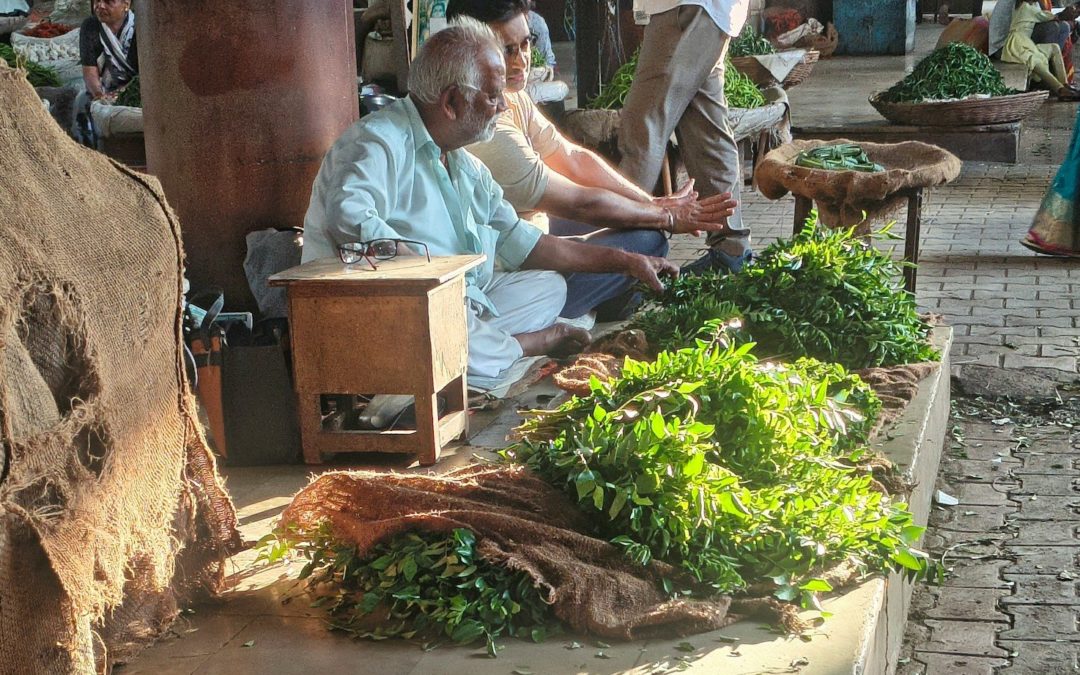
What is Ethnobotany and Who Uses It Today?
What is Ethnobotany and Who Uses It Today?
Introduction
Ethnobotany is the multidisciplinary study of the relationships between people and plants: how human cultures use, manage, classify, and perceive plant life. It bridges botany, anthropology, ecology, pharmacology, history, and law to document traditional knowledge about plants-medicinal uses, food, materials, spiritual practices, agricultural systems, and even social organization related to plant use. Ethnobotany values local and Indigenous knowledge as both culturally significant and scientifically informative, and it explores how that knowledge can inform conservation, sustainable development, and biomedical discovery.
A brief history of ethnobotany
- Prehistory and ancient civilizations: Long before ethnobotany became a formal discipline, people across the world developed detailed plant knowledge. Archaeological evidence and ancient texts show systematic use of medicinal and food plants in ancient Egypt, China, India, Mesopotamia, Mesoamerica, and elsewhere.
- Early written records and herbals: Works such as Dioscorides’ De Materia Medica (1st century CE) and medieval herbals compiled plant uses for medicine and cuisine, serving as early ethnobotanical references.
- Formal naming of the field (late 19th century): The English botanist John William Harshberger is credited with coining the term “ethnobotany” in 1895 to describe the study of how people in different cultures use plants.
- 20th century and the modern discipline: Richard Evans Schultes, often called the “father of modern ethnobotany,” carried out systematic fieldwork among Indigenous peoples in the Amazon (mid-1900s), documenting psychoactive and medicinal plant uses and helping establish methods for ethnobotanical field study. Since then, the field has expanded to include ecological and ethical concerns, intellectual property issues, and formal partnerships with Indigenous communities.
- Contemporary developments: Modern ethnobotany integrates molecular tools, pharmacological assays, GIS mapping, participatory research methods, and legal frameworks such as the Convention on Biological Diversity and the Nagoya Protocol for access and benefit-sharing.
Who uses ethnobotany today?
Ethnobotany is applied across many sectors. Key users include:
- Indigenous and local communities: Primary holders and transmitters of traditional botanical knowledge; they use ethnobotanical practice for medicine, food, cultural rituals, and land management.
- Ethnobotanists and anthropologists: Document, interpret, and publish plant knowledge while striving for ethical collaboration and proper consent.
- Botanists and taxonomists: Use ethnobotanical data to prioritize species for study, conservation, and classification.
- Pharmacologists and pharmaceutical companies: Mine traditional knowledge to guide drug discovery (ethnopharmacology), though this raises legal and ethical questions about consent and benefit-sharing.
- Conservationists and ecologists: Use traditional use data to identify culturally important species, prioritize habitat protection, and support biocultural diversity.
- Agricultural scientists and crop breeders: Study traditional crop varieties, seed systems, and agroecological practices (e.g., companion planting, landrace maintenance) to improve resilience and food security.
- Public health practitioners and herbalists: Integrate traditional plant remedies into community health strategies, where appropriate and safe.
- Policymakers and legal experts: Build frameworks for intellectual property, biodiversity conservation, and equitable benefit-sharing (e.g., the Nagoya Protocol).
- Museologists and ethnobotanical garden curators: Preserve plant collections and cultural knowledge for education and research.
- Educators and students: Use ethnobotany as an interdisciplinary teaching tool linking biology, culture, and sustainability.
- Forensic botanists and archaeobotanists: Use plant remains to solve crimes or reconstruct past human-plant interactions.
Key examples and case studies
These well-known examples show how ethnobotany has influenced science, medicine, and policy:
- Quinine and Cinchona (Cinchona spp.): Indigenous peoples in the Andes used cinchona bark to treat fevers. This knowledge led to the isolation of quinine, a pivotal antimalarial drug that shaped global medicine and colonial history. (See: https://www.britannica.com/science/quinine)
- Artemisinin and Artemisia annua: Traditional Chinese medicine used Artemisia plant preparations for fevers. Tu Youyou and colleagues drew on ancient texts to isolate artemisinin, a breakthrough antimalarial that earned her the 2015 Nobel Prize in Physiology or Medicine. (See: https://www.nobelprize.org/prizes/medicine/2015/tu/facts/)
- Rosy periwinkle and vincristine/vinblastine: Traditional knowledge in Madagascar did not directly prescribe modern cancer therapies, but botanical research on Catharanthus roseus led to the discovery of alkaloids used in chemotherapy for certain cancers. This is often cited as an example of the potential medical importance of plant diversity. (See: https://en.wikipedia.org/wiki/Rosy_periwinkle)
- Aspirin and willow bark: Longstanding folk uses of willow bark for pain relief were part of the historical trail that led chemists to isolate salicin and develop aspirin (acetylsalicylic acid). (See: https://www.britannica.com/science/aspirin)
- Neem, Hoodia, and bioprospecting controversies: Efforts by companies to patent or commercialize compounds derived from plants used by Indigenous peoples have led to disputes over ownership and benefit-sharing. These cases illustrate why ethical frameworks and legal protections are central to modern ethnobotany. (See: https://www.cbd.int/abs/)
- Crop domestication and ethnobotany: Ethnobotanical research has clarified how Indigenous farmers domesticated and managed staple crops-e.g., maize (corn), potatoes, quinoa-informing plant breeding and conservation of agrobiodiversity.
Methods used in ethnobotany
Ethnobotany combines qualitative and quantitative approaches:
- Ethnographic fieldwork: participant observation, interviews, focus groups, and oral histories recorded with informed consent.
- Botanical methods: specimen collection, herbarium voucher preparation, taxonomic identification.
- Laboratory analyses: phytochemical screening, bioassays, molecular genetics.
- Participatory and community-based research: co-design of studies, community benefit agreements, capacity building.
- GIS and spatial analysis: mapping resource use and habitat distribution.
- Literature review and historical ethnobotany: analysis of historical texts, herbals, and colonial records.
Ethics, law, and Indigenous rights
Ethnobotany must address ethical obligations:
- Informed consent: researchers must obtain meaningful, prior informed consent from communities.
- Benefit-sharing: communities should receive fair benefits if their knowledge leads to commercial products (Nagoya Protocol on Access and Benefit-sharing: https://www.cbd.int/abs).
- Intellectual property: debates continue over patents on traditional knowledge and biological resources.
- Cultural sensitivity and data sovereignty: communities often assert rights over how their knowledge is recorded, stored, and shared.
- Conservation and co-management: ethical ethnobotany often supports community-led conservation and sustainable use.
Frequently asked questions (FAQs)
Q: What is the difference between ethnobotany, ethnopharmacology, and economic botany?
A: Ethnobotany is the broad study of human-plant relationships (cultural, ecological, utilitarian). Ethnopharmacology focuses specifically on how plants are used as medicines and seeks pharmacological validation. Economic botany emphasizes plants’ economic roles-food, fiber, timber, trade-and how plant-based economies function.
Q: Can traditional plant knowledge be trusted for treating serious illnesses?
A: Many modern drugs have origins in traditional uses, which can guide research. However, not all traditional remedies are safe or effective by modern standards. Ethnobotanical leads require rigorous pharmacological and clinical testing before medical adoption.
Q: How are Indigenous communities protected from exploitation?
A: International agreements like the Convention on Biological Diversity and the Nagoya Protocol provide frameworks for access and benefit-sharing. Ethical research also relies on local laws, community protocols, prior informed consent, and co-designed agreements.
Q: How do researchers document plant knowledge ethically?
A: Best practices include transparent communication, consent, community participation in research design, shared ownership agreements, capacity-building, and protocols for how data and specimens may be used and published.
Q: What careers involve ethnobotany?
A: Careers can include academic researcher, conservationist, ethnopharmacologist, curator of botanical gardens or herbariums, NGO practitioner, community liaison, policy advisor, public health worker, and sustainable agriculture specialist.
Q: How can I learn ethnobotany?
A: Background in biology, botany, anthropology, or ecology is useful. Seek university courses, fieldwork internships, ethnobotanical garden programs, or organizations like the Society of Ethnobiology (https://ethnobiology.org) and Society for Economic Botany (https://www.econbot.org).
Further reading and resources (clickable links)
- Royal Botanic Gardens, Kew – Ethnobotany and medicinal plant information: https://www.kew.org/science/our-science/projects/ethnobotany
- Convention on Biological Diversity (CBD): https://www.cbd.int
- Nagoya Protocol on Access and Benefit-sharing (CBD): https://www.cbd.int/abs
- Society of Ethnobiology: https://ethnobiology.org
- Society for Economic Botany: https://www.econbot.org
- Biographical and historical: Richard Evans Schultes (Wikipedia): https://en.wikipedia.org/wiki/Richard_Evans_Schultes
- Artemisinin and the work of Tu Youyou (Nobel Prize): https://www.nobelprize.org/prizes/medicine/2015/tu/facts/
- Rosy periwinkle (Catharanthus roseus) overview: https://en.wikipedia.org/wiki/Rosy_periwinkle
- Aspirin and willow history (Encyclopaedia Britannica): https://www.britannica.com/science/aspirin
Conclusion
Ethnobotany is an inherently interdisciplinary and applied field that recognizes the deep ties between people and plants. Rooted in millennia of Indigenous and local knowledge, modern ethnobotany contributes to medicine, conservation, sustainable agriculture, cultural preservation, and policy. Today it is practiced by a wide array of actors-Indigenous stewards, scientists, conservationists, public-health professionals, and policymakers-who increasingly emphasize ethical research, community partnership, and equitable benefit-sharing. As global environmental change and biodiversity loss accelerate, ethnobotany’s role in documenting and supporting biocultural diversity is more important than ever.
If you’d like, I can:
- Expand one of the case studies into a longer, referenced profile (e.g., artemisinin or rosy periwinkle).
- Provide a bibliography of academic sources and textbooks for deeper study.
- Suggest university programs, field courses, or community organizations to get hands-on experience.